Care3 min read
Cake decorations: what is edible and what should come off?
A practical handover guide for flowers, glitter, photo prints, ribbons and supports: identify the materials before cutting and serving a decorated cake.
In this article
Quick answers
- Appearance does not tell you whether a decoration can be eaten.
- ‘Non-toxic’ and ‘edible’ are different labels.
- Ask for a clear removal plan and pass it to the person serving.
Treat the finish as a map of materials
A decorated cake can combine food with things used only for display or structure. A bow might be ribbon or a modelled decoration. A flower might be piped, made from sugar or a real bloom. A gold-looking sphere might have a different material from the frosting below it. The same visual idea can be made in several ways, so guessing from a photograph is unreliable.
The most useful handover question is ‘Please show us what stays on the plate and what comes off first.’ Ask the maker to point to each relevant item. If someone else will cut the cake at a Cumilla family meal, office or reunion, include them in that explanation rather than relying on a second-hand guess after the candles.
Edible is not the same as non-toxic
The FDA’s decorative-product advice distinguishes edible glitter or dust from products labelled only non-toxic or decorative. It advises using products intended for food and checking ingredients, and removing non-edible decorations before eating. This is material-selection guidance from a US food authority, not a claim that a particular product or this cake has been certified by it.
A craft-shop sparkle, a social-media product name or a shiny finish is not enough information. If a decoration is unfamiliar, ask what it is and whether it is intended to be eaten. Keep the answer specific to the material used on your cake; another baker’s product photo is not evidence for this order.
Questions for common decorations
| What you see | What to establish before serving |
|---|---|
| Flower or large leaf | Real or modelled? Any stem, wire or inserted support to remove? |
| Gold or pearl detail | What material is it, and is it meant to be eaten? |
| Photo or printed message | Edible print, or removable sheet/topper with a backing? |
| Bow, ribbon or lace | Food decoration or fabric that comes off? |
| Tall topper or tier | Where are the supports and boards, and who removes them? |
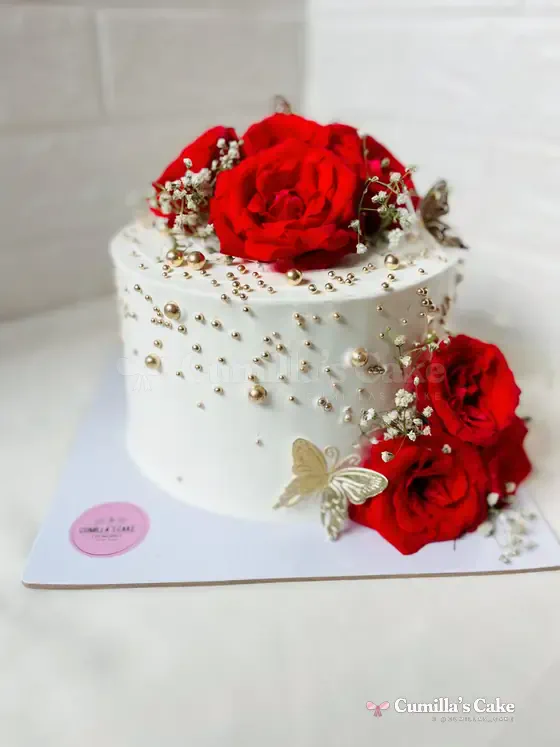
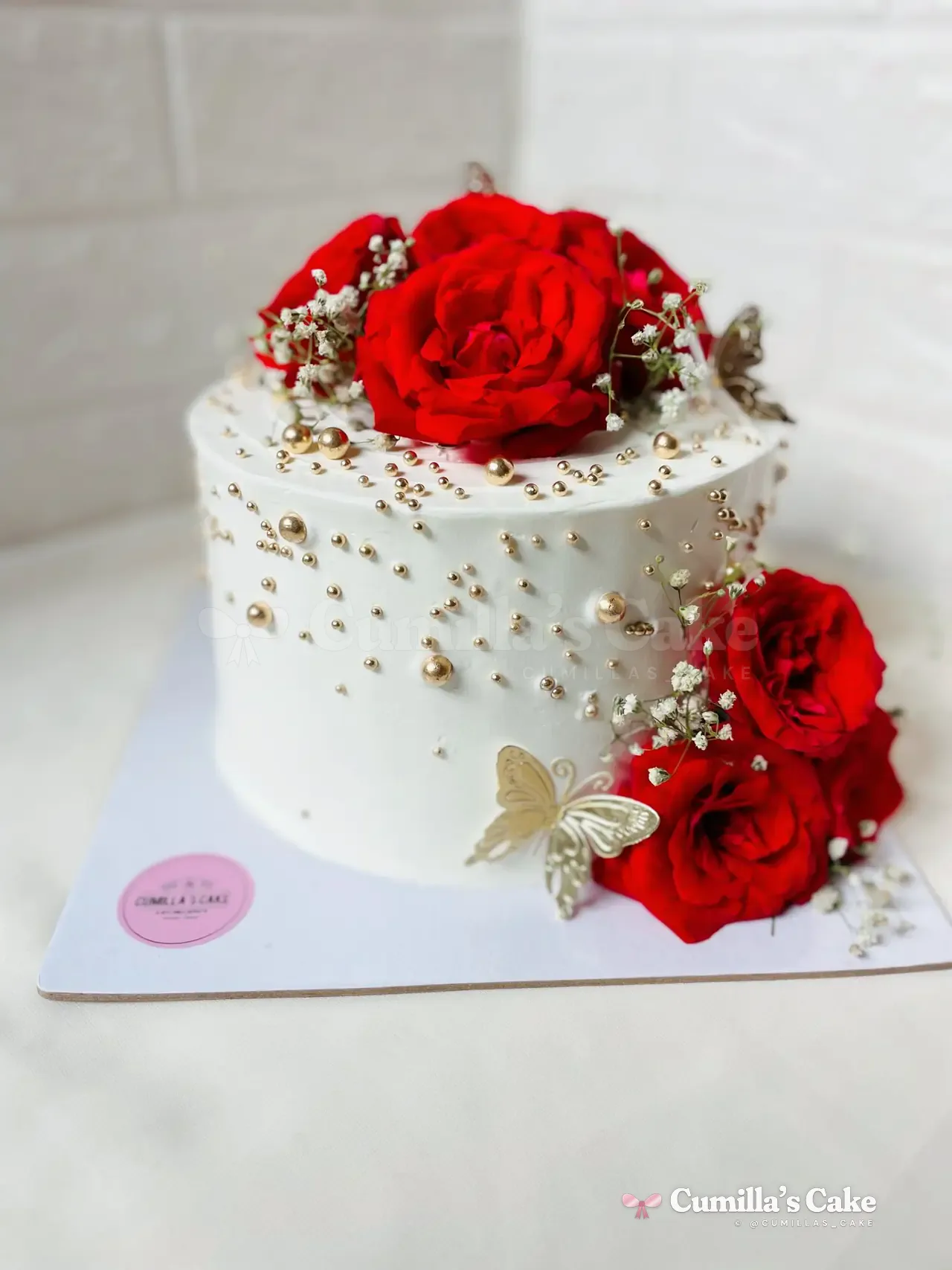 White cake crowned with fresh red roses, a gold butterfly and gold pearl sprinkles
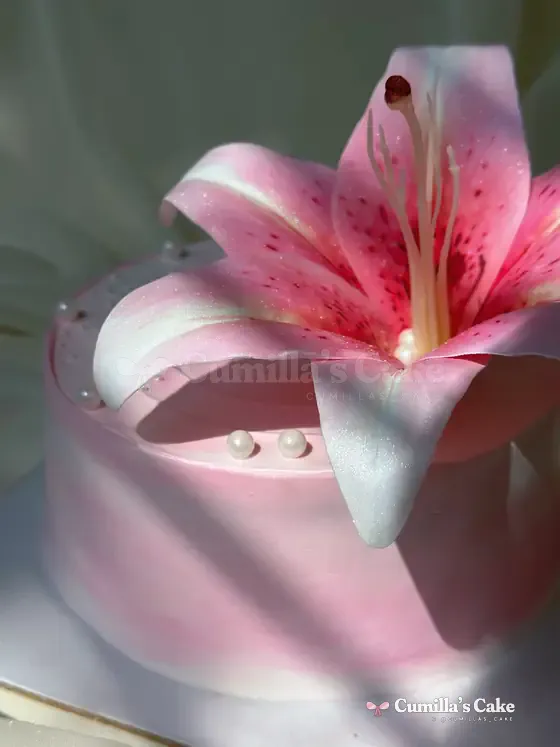
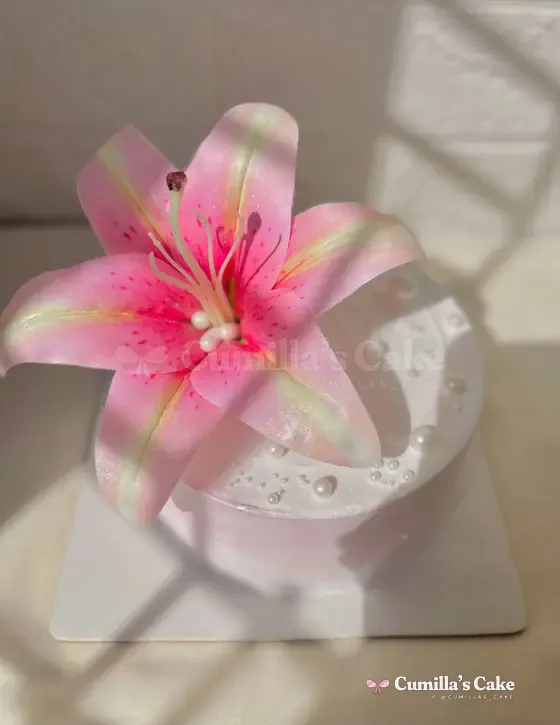
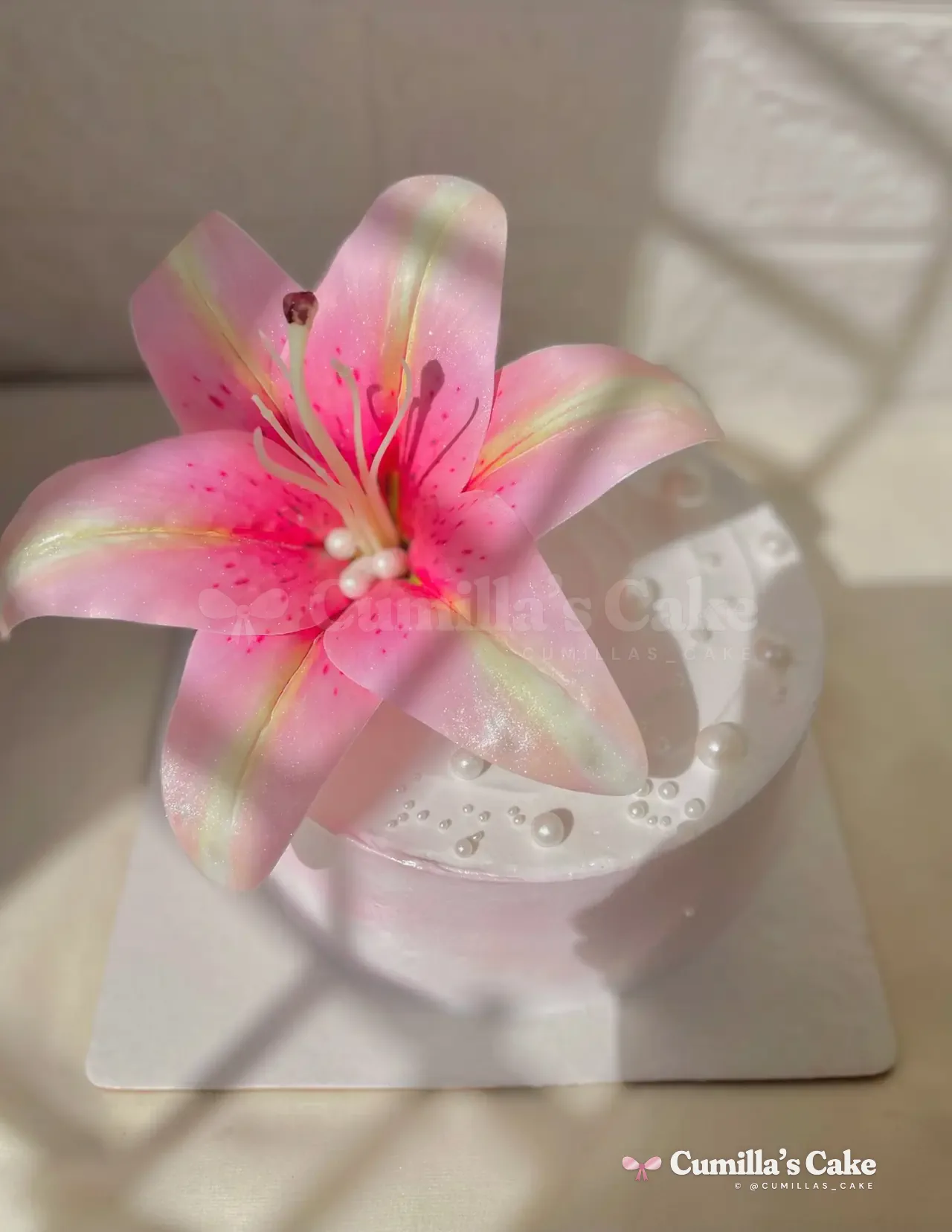 Pink stargazer sugar lily on a white cake
Do not add unknown decorations at home
It is tempting to add a flower from a bouquet, a new ribbon or a borrowed topper just before guests arrive. That changes the material plan the maker explained. Keep unfamiliar objects off the edible surface and ask before adding them. A flower that looks like a sugar flower in the portfolio is not interchangeable with a bloom bought for a vase.
If you want to keep a topper as a souvenir, say so during the design discussion. The maker can explain whether it is removable and how it is attached. Do not assume that something described as a sugar decoration is easy or suitable for every guest to bite; ask about its texture and any concealed support too.
A calm serving handover
- Finish the display photographs before dismantling the decoration.
- Use the maker’s removal instructions; do not pull on an unfamiliar structural part.
- Place removed pieces together away from serving plates.
- Follow the cutting plan for the finished cake and its tiers.
- Tell guests about any relevant remaining decoration before handing over slices.
For ingredient concerns, decoration questions belong alongside the sponge and filling questions in the allergy enquiry. For quantities, prepare the portion plan. Knowing what to remove is a different task from knowing how many people the cake will feed.
Questions people ask
Does non-toxic glitter mean edible glitter?
No. Confirm that the product is intended for food and check its ingredient information. Do not treat a decorative-only label as an edible claim.
Can every sugar flower be eaten without checking?
Do not assume so. Ask about the material, texture and any wire, stem or other support that must be removed.
Who should know the removal instructions?
The person actually cutting and serving the cake. Pass the maker’s specific instructions to them before the event.
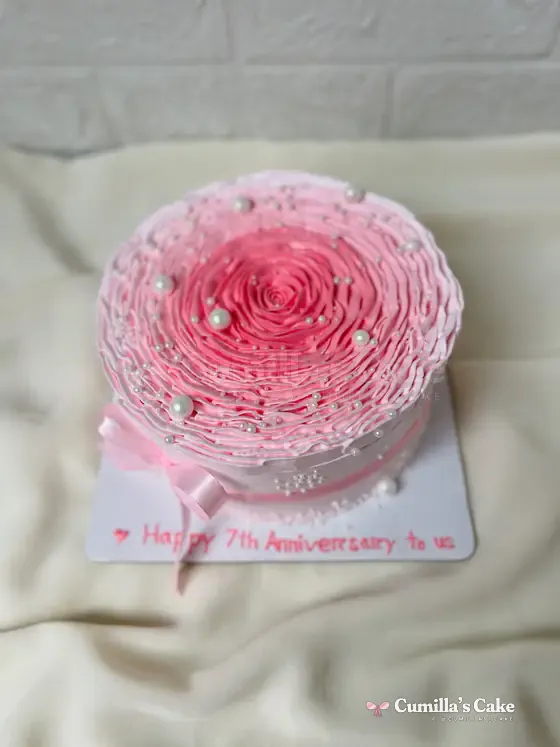
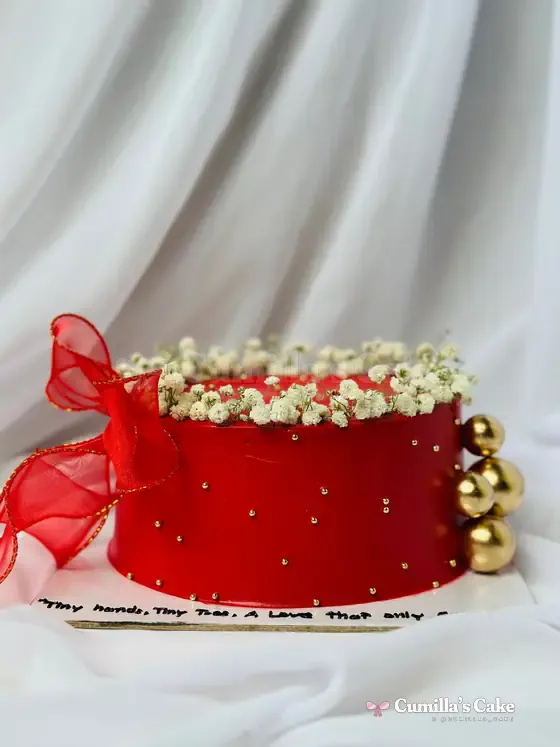
Cakes from this article
Keep reading
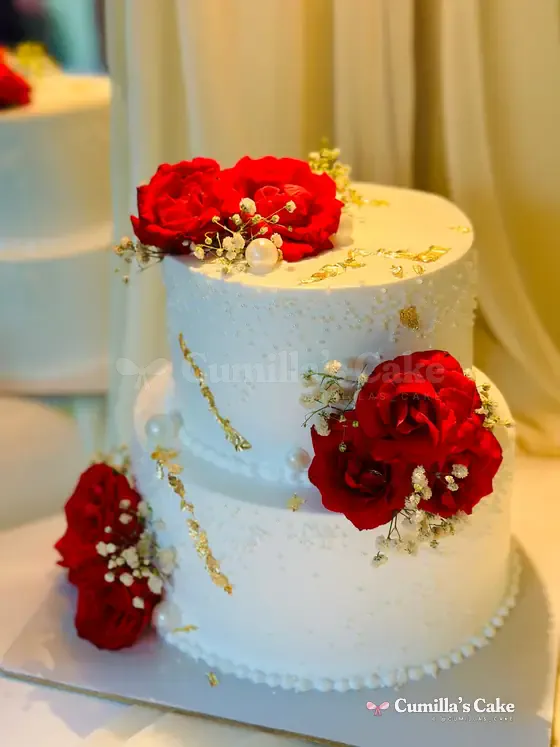 Cake portions: plan the size, slices and serving jobWeight alone cannot tell you how many guests a cake will feed. Compare dimensions, slice sizes and a practical cutting plan for your Cumilla gathering.Read
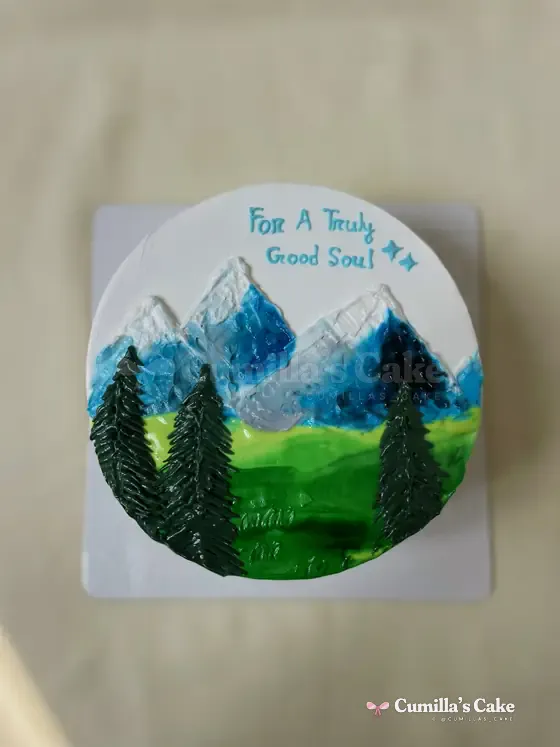 Photo cakes: prepare an image that works on the cakeChoose a clear original image, protect faces from the crop, check the wording and agree whether the finished print is edible or removable.Read
 Sugar lilies, piped roses and floral details: a visual guideCompare the scale and placement of lilies, roses and smaller floral details in real cakes. Prepare clear questions about materials and design.Read