Styles3 min read
Read the piping: shells, beads, swags and ruffles on vintage cakes
A visual vocabulary for the borders you love. Read real portfolio details, separate piping from added bows, and turn a reference into a clearer design brief.
In this article
Quick answers
- Identify the shape of the border before trying to name its recipe or tool.
- A repeated shell, a round bead and a hanging swag create different rhythms.
- Choose the detail to emphasise and leave the lettering area deliberately clear.
Look at repeated shapes rather than ‘lots of icing’
A vintage cake can look elaborate while using a small number of repeated shapes. The rhythm comes from their size, spacing and placement: a broad border around the top, a finer line below it and a few accents at the sides. Once you can point to those parts, you can explain what you like without asking for every detail in a reference photograph.
Start with a three-part observation: where is the largest border, what repeats on the side, and how much of the top stays clear? These are visual facts you can read from a photograph. They do not reveal the exact nozzle, frosting recipe or order of making.
A small glossary you can point to
Wilton’s shell-border reference describes a chain of overlapping shells. Its separate ruffle reference illustrates a folded, frilled effect. These references help distinguish shapes; the table below is a plain-language guide for reading a design, not instructions for reproducing Mari’s technique.
| Detail | What to look for | Effect in a design |
|---|---|---|
| Shell | A ridged fan narrowing to a tail | A continuous scalloped rhythm |
| Bead | A small rounded dot | A finer edge or punctuation |
| Swag | A curve hanging between two points | Movement across the side |
| Ruffle | Repeated folds or frills | A softer, fuller outline |
| Layered borders | More than one row or scale | Depth and a stronger frame |
Read two real examples
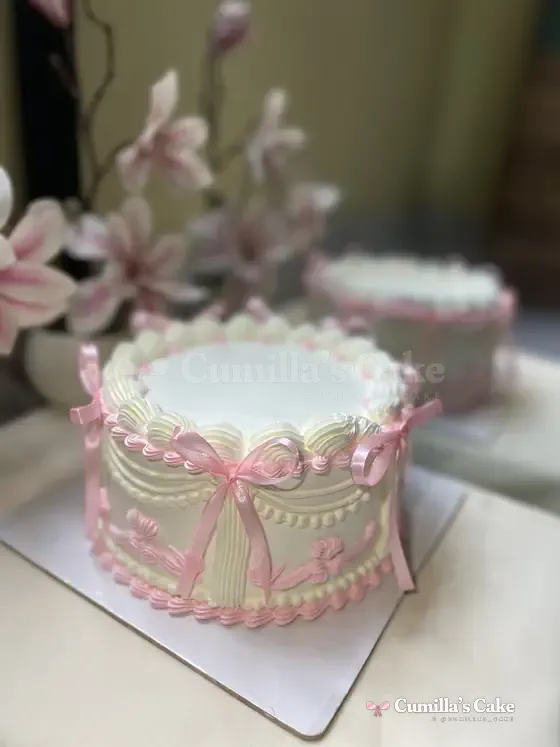
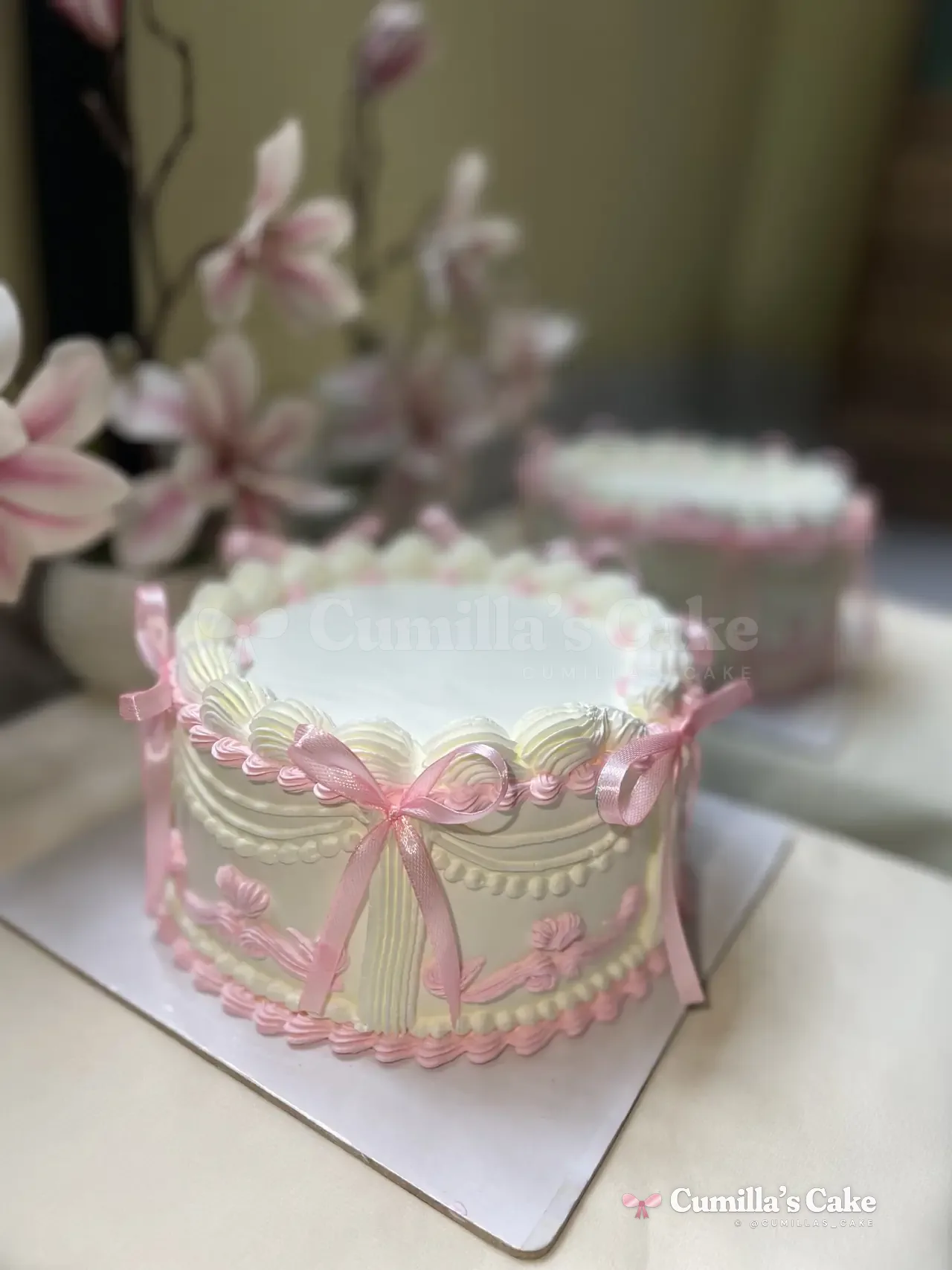 Blush vintage cake with ruffles and pearls
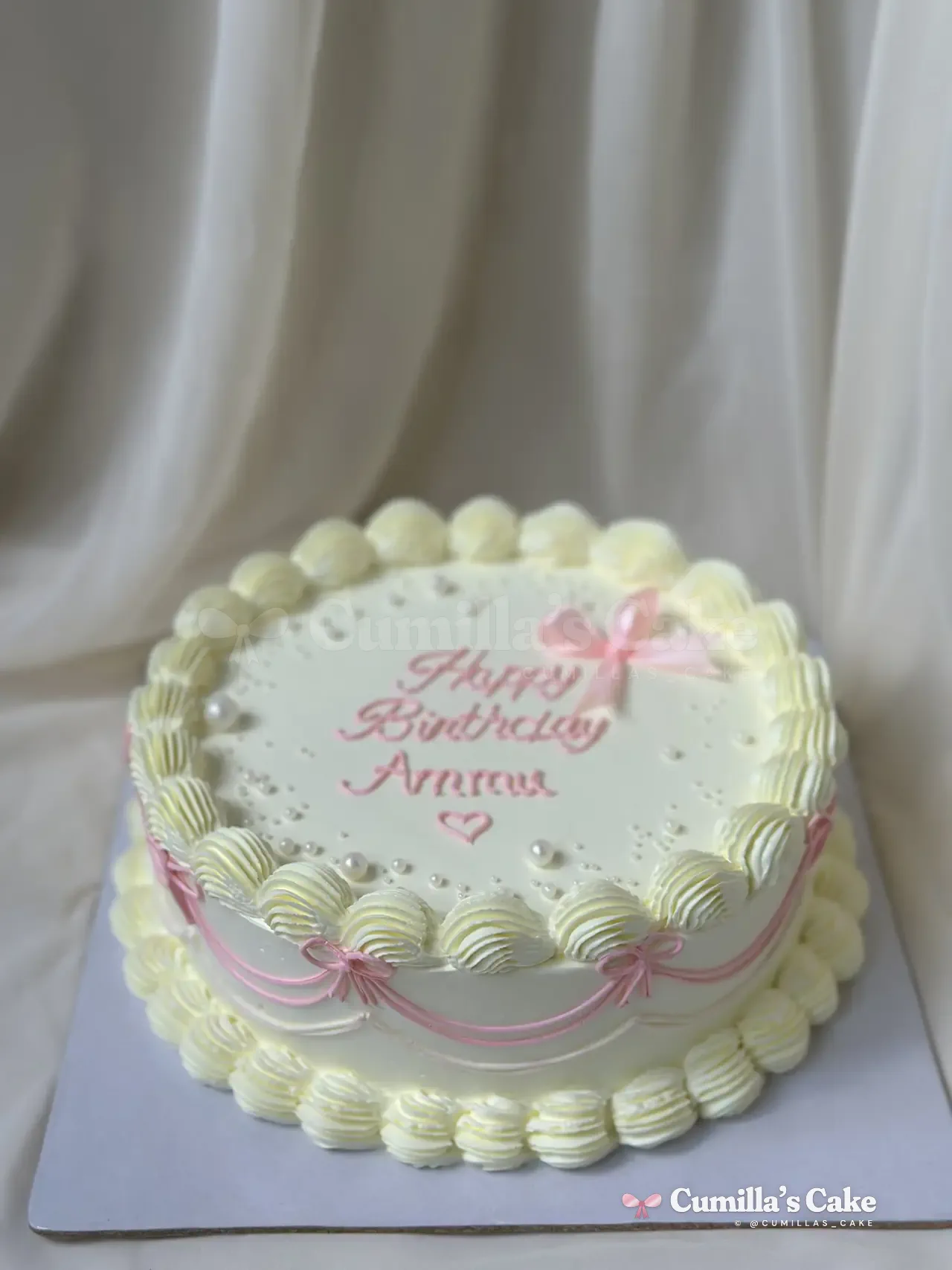 Cream “Happy Birthday Ammu” cake with pink ribbon swags
In the first photograph, broad pale ridged shapes frame the top while smaller pink details, curved lines and bead-like dots build the side. Ribbon bows add another texture. In the second, the large pale top border leaves a clear centre for the birthday message, with fine pink swags below. The contrast in scale keeps the decoration from becoming one uniform band.
Notice that an added bow and a piped bow-like shape can look related while being different materials. Ask what is removable rather than assuming every visible detail is frosting. The decoration guide explains that separate serving question.
Edit the border to suit the message
A heavily framed heart and a round cake with one border leave different reading areas. Write the main message before adding extra rows. If the name is long, a finer inner border or wording on the board may work better than making the letters smaller. A border is a frame; it should make the message feel intentional rather than squeeze it into the last gap.
As a proposed brief, try a cream cake with one generous shell border, a fine pink swag and three small bow accents. Then remove one detail and compare the balance. This is an editing exercise, not a customer order or a fixed studio preset. The aim is to discover which repeated shape carries the mood for you.
Send a visual brief, not a nozzle diagnosis
Browse vintage cakes, save two useful references and explain the part to keep from each. A clear sentence about shells and swags is more helpful than demanding a particular tool whose result may not fit the finished cake.
Questions people ask
Can I identify the exact piping nozzle from a picture?
Not reliably. Describe the visible shape, scale and placement; the maker can choose an appropriate method.
Are all vintage-cake bows edible?
No assumption should be made from appearance. Ask whether each bow is piped, modelled or removable ribbon.
How do I keep a vintage cake from looking crowded?
Choose a main repeated border, reduce competing accents and reserve the lettering area before adding more rows.
Cakes from this article
Keep reading
 Buttercream, whipped cream, ganache or fondant? Know the finishA useful guide to cake-finish vocabulary: distinguish the sponge, filling and outside, then describe the taste and decoration you actually want.Read
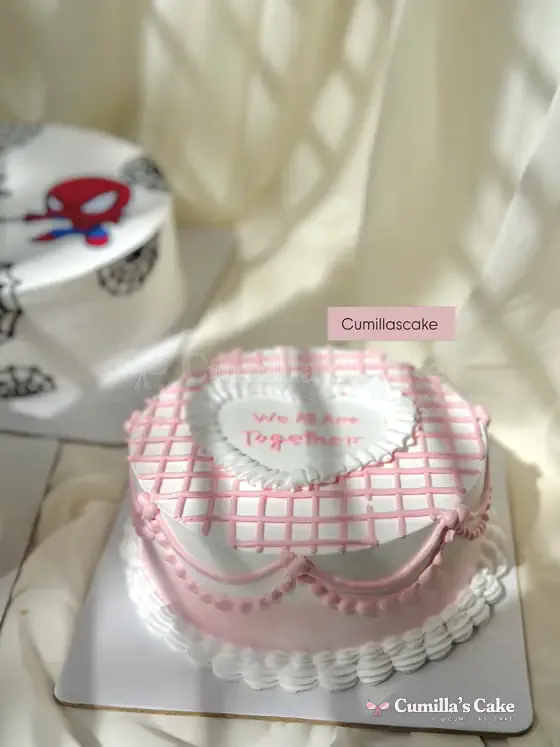
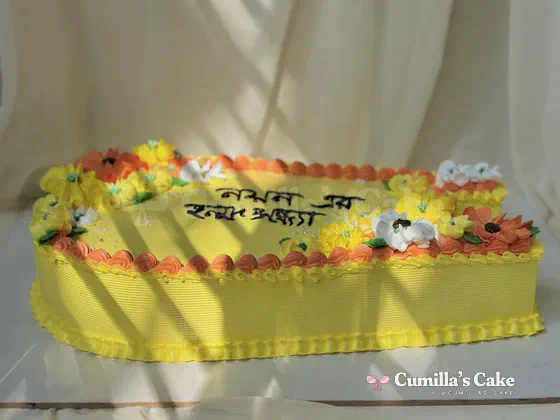 Bangla lettering on cakes: spacing, line breaks and clarityPrepare exact Bangla spelling and a short, readable cake message. Compare cake-top and board placement, and use the studio’s wording preview thoughtfully.ReadDesign notes: gingham, piping and a vintage heartLook closely at real vintage cake VI·03: a pink grid, heart outline and repeated borders. Learn which details to prioritise in your own cake brief.Read