Styles3 min read
Black, navy and burgundy cakes: keep the detail readable
Build a dark cake palette with clear lettering, a deliberate focal point and a realistic photo plan, without confusing the outside colour with the flavour.
In this article
Quick answers
- A dark accent can give the mood without covering the whole cake.
- Separate the lettering colour from the background and decorative border.
- Dark colour does not establish chocolate flavour or the finish material.
Decide how much darkness the design needs
There are at least three ways to make a cake feel dark and dramatic: a fully dark surface, a light cake with a dark border, or a pale base with one strong dark accessory. These choices create different balances. Before requesting an all-black cake, ask whether the detail you actually love is the black ribbon, the contrast or the overall silhouette.
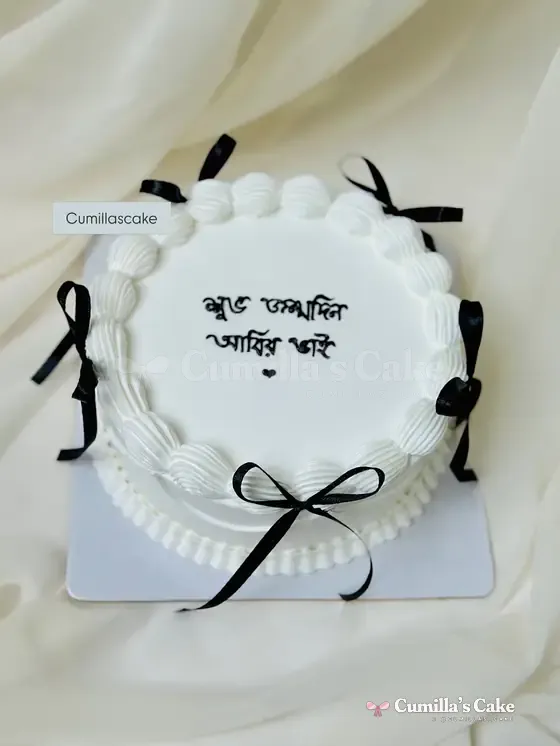
The portfolio’s white vintage cake with black bows is a useful example of a limited accent. The dark shapes stand out because there is light space around them. This can be a more controlled starting point when you want the names and piping to remain the main event.
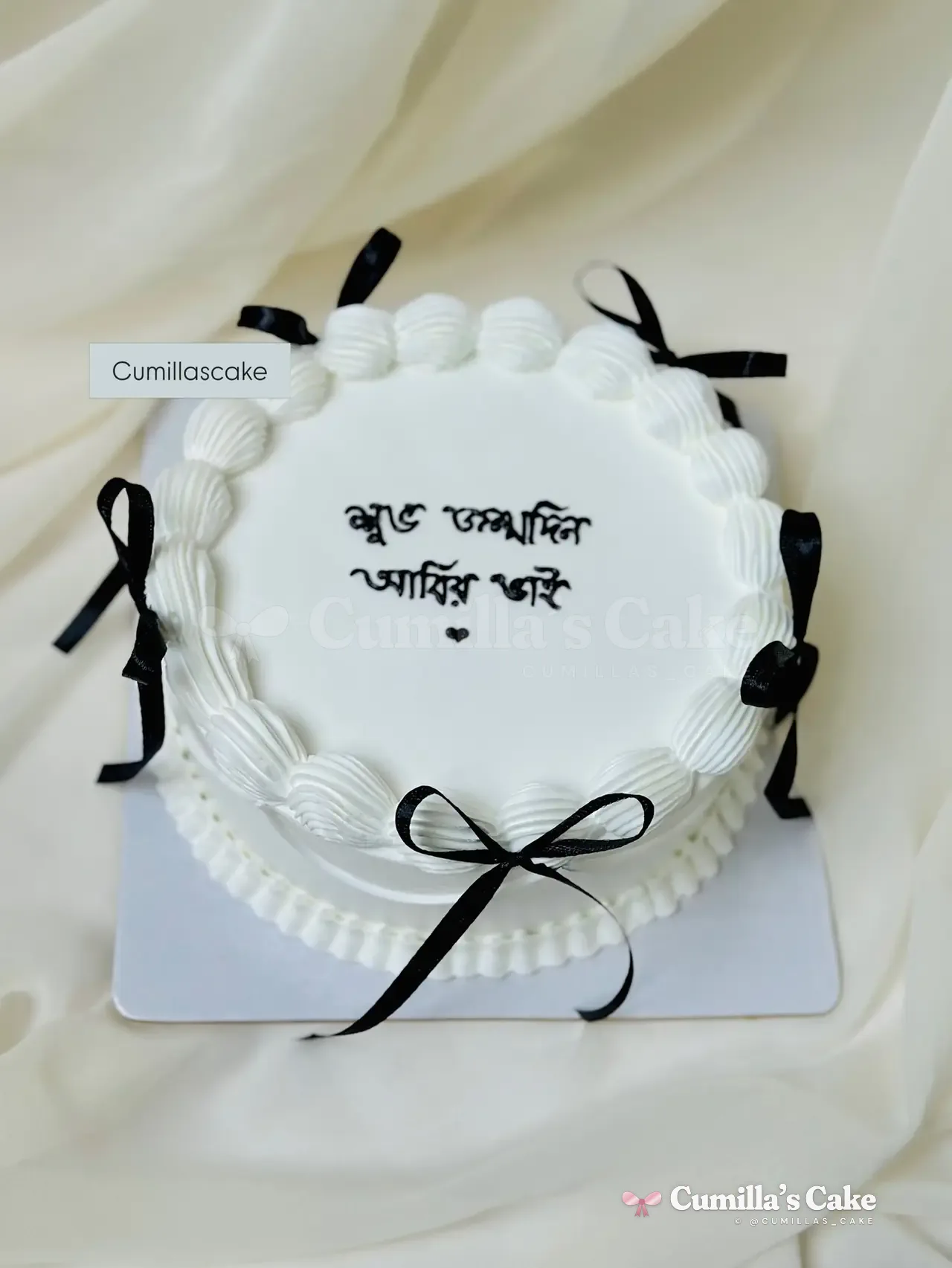 White vintage cake with black ribbon bows and Bangla lettering
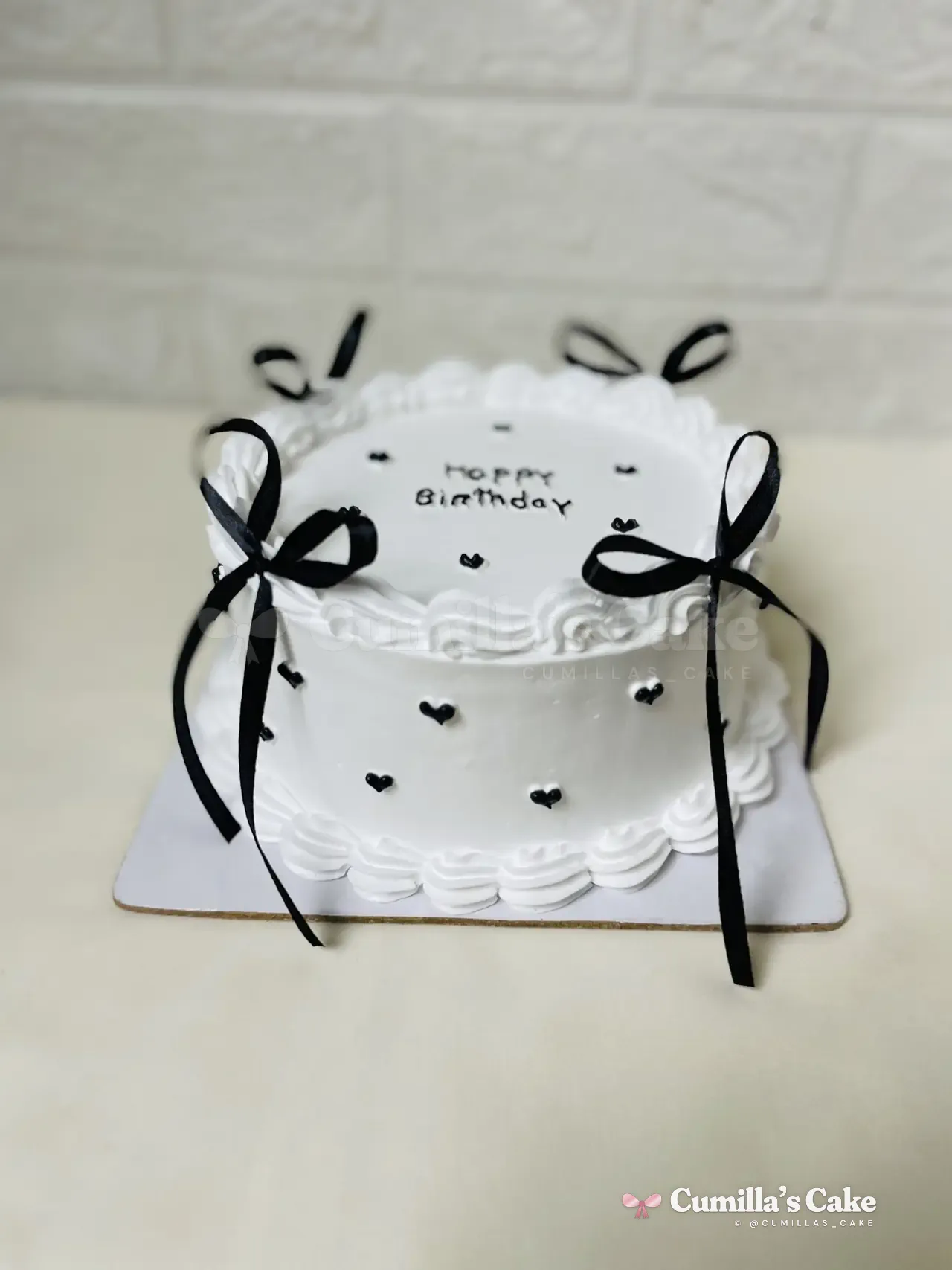 White vintage cake with black bows and tiny hearts
Build a palette with jobs for each colour
| Palette and base | Reading area | Small accent |
|---|---|---|
| Cream or white monochrome | Dark lettering | Black bows or border |
| Evening navy | A pale panel or clear light text | One metallic-look detail |
| Warm burgundy | Cream or blush contrast | A few rose-toned details |
These are composition ideas, not promises of an exact colour formula or decoration material. A metallic-looking accent also needs the material check in the decoration guide. You can request the visual effect while leaving the maker room to explain a suitable, available method.
Give the message enough contrast
W3C’s contrast explanation concerns digital text and backgrounds. Its broad design lesson is useful here too: similar lightness can make a message hard to distinguish. This is an editorial analogy, not a claim that a cake passes a web-accessibility standard. For cake wording, begin with a clearly different light or dark value and enough undecorated space around the letters.
A narrow navy name on a black background may disappear even if the colours looked different in a swatch. A crowded gold-looking script can also become hard to read among many small highlights. Prioritise the name, simplify the line and ask whether a separate light panel or the board would serve the message better.
Plan for the room where it will be seen
A screen preview is backlit; a cake is seen in the room’s actual light. For an evening Cumilla gathering, tell Mari if the main photograph will be taken under warm room light or coloured party lighting. Do not make a subtle difference between black and deep blue the only detail carrying the whole design.
Keep a clean background with a different tone from the cake. A dark cake against a very dark cloth can lose its outline; a small separation in the scene makes the shape easier to record. Prepare the photograph before serving rather than asking the cake to wait outside its required storage conditions while the room is rearranged.
Separate the outside from the eating experience
Black does not automatically mean chocolate, burgundy does not prove red velvet, and a white finish does not prove vanilla. Use the flavour list for the inside discussion and the finish guide for the outer material. If you care more about the flavour than a precise deep colour, say so; it gives the maker a useful order of priorities.
Questions people ask
Must the whole cake be black for a black-and-white theme?
No. Black bows, a border or lettering on a light base can create the theme with a smaller dark area.
Does a dark cake always taste like chocolate?
No. Confirm the sponge and filling separately from the exterior colour.
Can I use an exact colour from my screen?
Use it as a direction, but the finish and room lighting can change its appearance. Agree the intended palette rather than an exact screen match.
Cakes from this article
Keep reading
 Buttercream, whipped cream, ganache or fondant? Know the finishA useful guide to cake-finish vocabulary: distinguish the sponge, filling and outside, then describe the taste and decoration you actually want.Read
 Photograph your cake with a phone: a simple five-shot planCapture the whole design, lettering and handmade details with a short phone-photo workflow that keeps colours believable and the celebration relaxed.Read
 Match your cake to an outfit or event paletteBuild a clear cake palette from a main colour, an accent and a quiet background. Compare real floral, holud and birthday designs from Cumilla.Read